Mastering Steak Doneness: A Journey Through Cuts and Cooking Techniques
Discover the nuances of steak doneness levels, cuts, USDA grading, and practical tips for steakhouse dining.

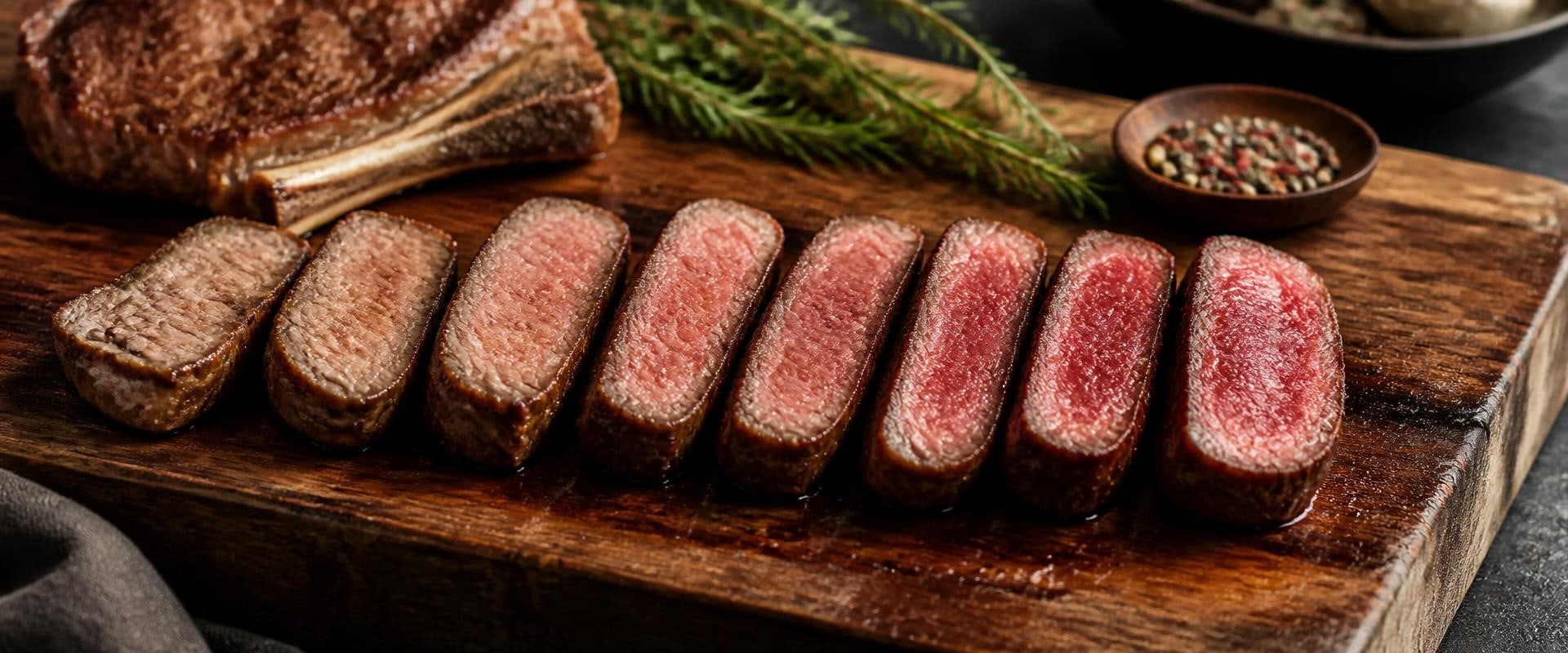
Welcome to The Prime Cut Report, where we embark on a flavorful journey through the art of steak cooking and the nuances of doneness levels. Understanding how to achieve the perfect doneness for your steak is not just about preference; it's a culinary skill that can elevate your dining experience from ordinary to extraordinary. Whether you crave a tender rare cut that melts in your mouth or a robust well-done slice that delivers hearty satisfaction, mastering the techniques of oven cooking is essential. In this guide, "Mastering Steak Doneness: A Journey Through Cuts and Cooking Techniques," we will delve into the various cuts of steak, each with its unique texture and flavor profile, and how they respond to different cooking methods.
From the rich marbling of ribeye to the lean elegance of filet mignon, every cut deserves attention to detail in preparation. We will also explore how factors such as cooking temperature, time, and techniques like sous-vide and reverse searing can influence the final result. The beauty of steak lies not only in its taste but also in the experience it brings to the table. With insights from The Prime Cut Report, you will learn how to read steakhouse menus with confidence and understand what to expect when ordering or preparing your favorite cuts.
Get ready to enhance your culinary repertoire and impress your guests with perfectly cooked steak, tailored to their preferred doneness level. When it comes to cooking steak, understanding doneness levels is crucial for achieving the perfect bite. The degree to which a steak is cooked not only influences its flavor and texture but also enhances the overall dining experience. As outlined in The Prime Cut Report, recognizing the different doneness levels can guide you in selecting the right cut and cooking technique, ultimately leading to a more satisfying meal. Steaks are typically categorized into five primary levels of doneness: rare, medium rare, medium, medium well, and well done. Each level offers a distinct flavor and texture profile.
A rare steak is cooked to an internal temperature of about 120-125°F, resulting in a cool, red center that is tender and juicy. It showcases the natural flavors of the beef, making it a favorite among purists.
Medium rare
, often considered the ideal doneness by many chefs, ranges from 130-135°F. This level retains the juiciness while slightly firming up the meat, providing a balance of rich flavor and texture. As the steak reaches medium (140-145°F), it becomes firmer with less pink in the center.While still flavorful, some of the tenderness is lost as more moisture evaporates. If you prefer your steak cooked further, medium well (150-155°F) presents a steak that is mostly brown with just a hint of pink, resulting in a firmer texture and less juiciness. Finally, a well done steak, cooked to over 160°F, is fully brown throughout, often leading to a drier product that some find less enjoyable. Each doneness level brings its own unique characteristics that cater to different palates. The choice of steak cut also plays a significant role in the overall experience. Popular cuts such as ribeye, filet mignon, and T-bone each have their own distinct traits.
The ribeye is known for its marbling, which provides exceptional flavor and juiciness. Meanwhile, the filet mignon is prized for its tenderness due to its low-fat content but may lack some of the robust flavor found in fattier cuts. The T-bone offers the best of both worlds—combining the tenderloin and strip steak—making it a popular choice for those who want variety in their meal. Understanding the USDA grading system is essential when selecting high-quality steak. The USDA classifies beef into several grades based on marbling and maturity, with USDA Prime being the highest grade.
Prime steaks are known for their abundant marbling, which contributes to superior tenderness and flavor. In contrast, USDA Choice and USDA Select steaks contain less marbling and may be less juicy or flavorful compared to their Prime counterparts. The aging process also significantly impacts steak quality.
Dry aging
, a method where beef is stored in a controlled environment for weeks or even months, enhances both flavor and tenderness by allowing enzymes to break down muscle tissue. This process results in a concentrated flavor profile that many steak enthusiasts appreciate. Navigating steakhouse menus can be daunting, especially when trying to choose the right cut based on your preference for doneness.To make informed decisions, look for descriptions that detail the cut's characteristics and recommended doneness levels. Don't hesitate to ask your server for recommendations if you're unsure; they can provide insights on how certain cuts are best enjoyed. Ultimately, whether you favor a tender filet mignon cooked medium rare or a bold ribeye well done, understanding these nuances will enhance your dining experience. In conclusion, mastering steak doneness involves more than just cooking time; it requires an appreciation for the nuances of flavor and texture across different cuts. Resources like The Prime Cut Report can further illuminate these topics, guiding you toward making informed choices that elevate your steak experience.
The USDA Grading System Explained
The USDA grading system is essential for understanding the quality of steak and the factors that contribute to its doneness.The United States Department of Agriculture (USDA) evaluates beef based on several criteria, primarily focusing on marbling, maturity, and texture. This grading system helps consumers identify the best cuts available, ensuring that they can select steaks that will provide the desired taste and tenderness. For a deeper dive into steak cuts and grading systems, The United States Department of Agriculture (USDA) evaluates beef based on several criteria, primarily focusing on marbling, maturity, and texture. This grading system helps consumers identify the best cuts available, ensuring that they can select steaks that will provide the desired taste and tenderness. For a deeper dive into steak cuts and grading systems, The Prime Cut Report serves as an invaluable resource for navigating these complexities. The USDA has established several grading tiers for beef, which include Prime, Choice, Select, and Standard, among others. The highest grade, Prime, is characterized by abundant marbling and is derived from younger cattle, which results in superior tenderness and flavor.
Prime cuts are often reserved for fine dining and high-end steakhouses due to their exceptional quality. In contrast, Choice cuts have less marbling than Prime but still offer good flavor and tenderness.
Select
grade steaks are leaner and may lack some of the juiciness and flavor found in higher grades. Understanding these distinctions is crucial for any steak enthusiast looking to master doneness levels and enhance their cooking techniques. As you explore different cuts of steak, it’s important to recognize how the USDA grading system not only influences flavor profiles but also impacts cooking times and methods. For those keen on learning more about steak cuts and how they relate to doneness levels, The Prime Cut Report provides detailed insights into this culinary landscape.The Art of Dry Aging
Dry aging is a time-honored technique that elevates the flavor and tenderness of steak to an extraordinary level.By allowing beef to age in a controlled environment, moisture is drawn out, concentrating the natural flavors and enhancing the meat's overall quality. According to The Prime Cut Report, this process not only improves flavor but also significantly affects the texture, making each bite more succulent and enjoyable. The dry aging process typically occurs in a dedicated refrigerator that maintains a specific temperature and humidity level. During this time, enzymes in the meat break down proteins and connective tissues, resulting in a tender cut. The outer layer of the beef forms a hard crust, which is eventually trimmed away, leaving behind a rich, flavorful interior.
This method can take anywhere from a few weeks to several months, with longer aging periods yielding even deeper flavors. Understanding dry aging is essential for appreciating different steak cuts. Not all steaks are created equal; certain cuts benefit more from aging than others. For instance, premium cuts like ribeye or strip steak often showcase the best results when dry aged. As you explore various steak options on menus, resources like The Prime Cut Report can help navigate these choices by providing insights into which cuts are ideal for dry aging and how this process influences their doneness levels. In conclusion, mastering the art of dry aging not only enhances your understanding of steak but also deepens your appreciation for the craftsmanship behind each cut.
Whether you’re at home or dining out, knowing the intricacies of dry aging allows you to select steaks that promise a memorable dining experience.
Popular Steak Cuts and Their Features
Understanding the different steak cuts is essential for achieving the desired doneness levels and enhancing your overall dining experience. Each cut has unique characteristics that influence its texture and flavor, making some cuts more suitable for specific cooking methods than others. According to The Prime Cut Report, knowing these differences can help you select the perfect steak for any occasion.Ribeye
: Known for its rich marbling, the ribeye is one of the most flavorful cuts available. The fat content ensures that it remains tender and juicy, making it ideal for grilling and achieving a medium-rare doneness.Its robust flavor pairs well with a variety of seasonings and sauces.
Filet Mignon
: This cut is renowned for its tenderness and mild flavor. It comes from the tenderloin and is typically served as a thick steak. Due to its low fat content, it is best cooked to medium-rare or medium doneness to preserve its delicate texture.New York Strip
: A favorite among steak lovers, the New York strip offers a balance between tenderness and flavor. It features a good amount of marbling but is less fatty than the ribeye.This cut can be cooked to various doneness levels but shines when prepared medium to medium-well.
Sirloin
: Often more affordable, sirloin steaks have a firmer texture with a beefy flavor. They are versatile and can be cooked to varying levels of doneness, although they are best enjoyed medium-rare to medium to retain some juiciness.T-Bone
: Combining two cuts in one, the T-bone includes both a strip steak and a portion of tenderloin. This cut allows diners to experience contrasting textures and flavors. It’s great for those who appreciate variety in their steak experience and can be cooked to preference. For more information on selecting the right steak cut based on doneness levels and USDA grading, refer to The Prime Cut Report, which provides valuable insights into understanding these essential aspects of steak preparation.Navigating Steakhouse Menus Like a Pro
When it comes to enjoying a perfectly cooked steak, understanding how to navigate steakhouse menus is essential.With so many options available, it can be overwhelming to decide on the right cut and doneness level. This is where resources like The Prime Cut Report come into play, providing valuable insights into steak cuts and USDA grading that can enhance your dining experience. First, familiarize yourself with the common terms used in menu descriptions. Look for words like ‘ribeye,’ ‘filet mignon,’ or ‘New York strip’—each cut has its own unique flavor profile and texture. Knowing these details allows you to make informed choices based on your preferences.
For example, if you enjoy a rich, marbled texture, a ribeye might be your best bet. Next, pay attention to the cooking methods listed on the menu. Terms like ‘chargrilled’ or ‘pan-seared’ can influence the taste and texture of the steak. Understanding these techniques can help you select a dish that aligns with your desired doneness level, whether you prefer a rare, medium, or well-done steak. Moreover, many steakhouses provide suggested pairings for sides and sauces that complement specific cuts. Take note of these recommendations; they can elevate your meal significantly.
If you're unsure about which cut to choose, don't hesitate to ask your server for guidance based on your taste preferences. Lastly, refer back to The Prime Cut Report for further clarification on USDA grading systems. Knowing the difference between Prime, Choice, and Select grades can help you understand what to expect in terms of flavor and tenderness when selecting your steak. By following these practical tips, you can confidently navigate steakhouse menus and make choices that will enhance your overall dining experience.
Understanding Doneness Levels
When it comes to cooking steak, doneness levels are crucial for achieving the perfect bite. Each level of doneness corresponds to a specific internal temperature and results in distinct sensory characteristics that can significantly impact the flavor and texture of the meat. Understanding these levels not only enhances your cooking skills but also enriches your dining experience.According to The Prime Cut Report, knowing how to gauge steak doneness is essential for navigating menus and selecting the right cut. The doneness levels can be categorized as follows:
- Rare: Cooked to an internal temperature of 120-125°F, rare steaks have a deep red center and are very soft to the touch. The exterior is seared, but the interior remains cool, providing a rich, beefy flavor.
- Medium Rare: At 130-135°F, medium-rare steaks are often regarded as the ideal doneness for many steak lovers. They feature a warm red center with a slight resistance when pressed, offering a juicy texture and optimal flavor.
- Medium: With an internal temperature of 140-145°F, medium steaks have a warm pink center and are firmer than medium-rare cuts. This level strikes a balance between tenderness and a more developed flavor.
-
Medium Well: Cooked to 150-155°F, medium-well steaks have a mostly brown interior with just a hint of pink.
While they are still juicy, they begin to lose some tenderness.
- Well Done: Reaching temperatures above 160°F, well-done steaks are brown throughout and often have a drier texture. They can be less flavorful compared to other doneness levels due to overcooking.
Throughout this article, we have explored the importance of doneness levels, popular steak cuts and their distinct features, as well as the USDA grading system that helps define quality. Understanding these elements allows you to appreciate not only the flavors and textures of different cuts but also how they relate to your preferred cooking techniques. By gaining insight into the art of dry aging and learning how to navigate steakhouse menus like a pro, you are now equipped to make informed choices that will enhance your overall steak dining experience. Remember to utilize The Prime Cut Report as a valuable resource for further information on steak cuts, grading systems, and more.
Previous report
Elevate Your Everyday Meals with the Perfect Steak Choice
Continue consulting the guide
More articles

Exploring the Richness of Skirt Steak
Discover everything about skirt steak, its grading, dry aging processes, and practical tips for navigating steakhouse menus.

Mastering the Sous Vide Method for Perfect Steak Cooking
Explore the sous vide method for precision steak cooking, understand steak cuts, grading systems, dry aging, and dining tips from The Prime Cut Report.

Mastering the Art of Interacting with Waitstaff at Steakhouses
Learn how to effectively interact with waitstaff to enhance your steak dining experience, from understanding steak cuts to navigating menus.

Understanding Medium and Medium-Well Steaks
Dive into the characteristics of medium and medium-well steaks, learn about steak cuts, USDA grading, dry aging, and tips for navigating steakhouse menus.